
← The Growth Lab · AI SHOPPING
Organic, Paid and Agentic: Three Ways Brands Show Up in AI
Oct 21, 2026 · Read time: 3 min · DV8 Pacific
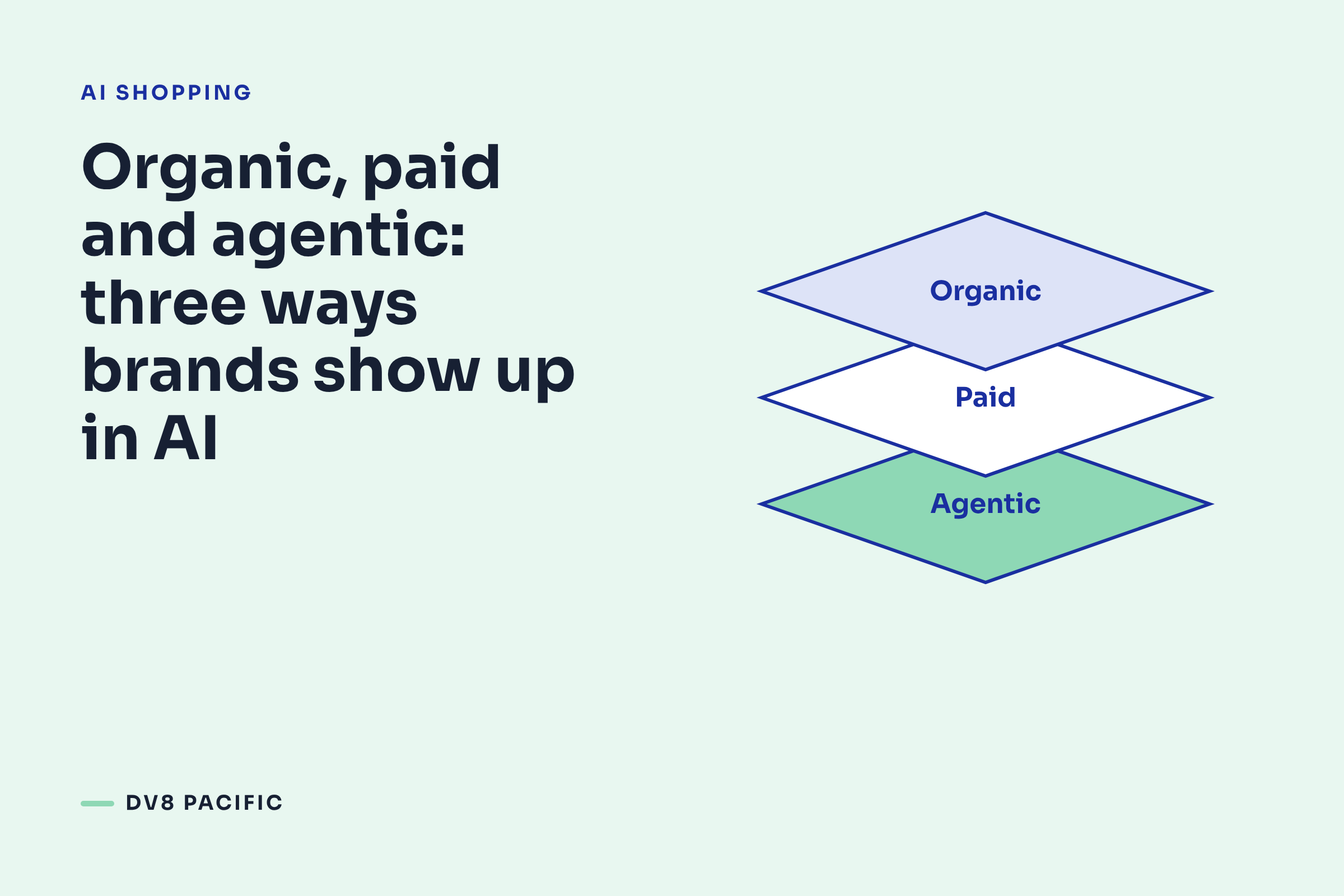
When brands talk about "showing up in AI," they usually mean one thing. In practice there are three distinct ways a brand can appear in an AI shopping journey, and each one works differently. Treating them as one problem leads to wasted effort and wrong expectations.
Layer one: organic presence
Organic presence is whether an AI assistant knows your brand and recommends it for the right needs, without anyone paying for it. When a shopper asks for "a good Korean sunscreen for sensitive skin," does your product appear in the answer, and is it described accurately?
No one can buy this placement. AI assistants build their answers from what they can find and trust: clear brand and product information on your own site, complete product attributes, reviews, mentions in credible publications and community discussions, and retailer listings. A brand earns organic presence by making itself easy to understand and easy to verify.
It also helps to separate being mentioned from being recommended. A brand can be cited as a source of general information and still rarely be the product the AI suggests. The commercially valuable outcome is recommendation, and it depends on how well your product fits the specific need the shopper describes.
Layer two: paid presence
Paid presence is advertising that appears alongside AI answers when a conversation turns commercial. ChatGPT now shows clearly labeled sponsored placements below its answers. Google is testing ads and offers inside AI Mode. Amazon sells sponsored prompts inside its shopping assistant.
On ChatGPT, OpenAI states that ads are kept separate from answers: advertisers cannot pay to change what the assistant says. A brand with strong ads and weak organic presence will be visible in the sponsored slot and absent from the recommendation itself. Paid placements also cut both ways. Research shared by Similarweb found that when a shopper names a brand in a ChatGPT conversation, an ad appears around 60% of the time, and it is often for a competitor.
Layer three: agentic presence
Agentic presence is whether an AI can act on your products: check price and stock, compare options, add an item to a cart and complete a purchase. This layer is built through integration rather than bought as a placement. It depends on product feeds with live price and availability, merchant integrations with AI platforms, clear retailer availability and, increasingly, brand-run AI agents that can answer shopper questions directly.
Agentic presence is the newest layer and the one most brands have not started on. It is also where the long-term stakes are highest, because when an AI completes the purchase, the brand it selects is the only one that gets the sale.
Plan for all three
The layers reinforce each other. Strong organic presence makes paid placements more credible. Paid campaigns reveal which shopper needs drive sales, which shows where organic content should focus. Clean product data supports all three. Assess each layer separately, and start with the weakest.
Sources: OpenAI, ChatGPT advertising announcements and Ads Help Center, 2026; Similarweb and Graphite, "ChatGPT Ads Playbook" webinar, 2026; DV8 Pacific analysis.